
A Year’s Review of Fiction
What makes a novel?
Or rather, what makes a novel good? I hate to begin by asking such a philosophical question, one that could probably spawn ages of response on BookTok, BookTube, what have you, but it’s that kind of critical question that can evade the mind of an avid reader from time to time. The reader could perhaps go for long stretches saying things like “this book is fantastic” or “God, you need to read this” or “I’ve never read something so beautiful” without a second thought as to why they would say those things. What made it fantastic, and why should I read this or what was beautiful about it? Being able to describe what it is about a novel or any art that makes it so enjoyable or touching might just deepen our understanding of what it is we like or how we relate to other people’s creations. In doing so, we might just be able to open ourselves up more empathetically, more freely to the world.
I know that swings the door wide open to criticism. The paragraph above is definitely the English Major brain deliberating on something that seems so inconsequential to the majority of the population. Because not everything needs explanation. Not everything can surface an explanation. And I think trying to define why you like something (let’s stick with art) can be just as detrimental to the work as trying to deepen your understanding of it.
Case in point: 2021. The year of feeling in my fiction reads. I say the year of feeling because it seemed that every novel I picked up, thought about, flipped through, read the last sentence, decided on, read tenaciously, and recommended all drew very vivid reactions from me. And is there merit in trying to figure out the why in which those responses came about? Sure there is, but I don’t think it’s necessary.
Thematically, each novel I read from the last year got a reaction I could pinpoint and name. There are notes in some of the margins where I had to jot down my feelings right then and there, wherein my journey with the characters, I experienced a flood of emotions, and the book was my only witness. Sometimes it was the trees, sometimes it was the rocks, sometimes it was the water. But the book was number one: the creator and the spectator for every emotion that welled within me.
I’ve felt vibrant, ferocious emotions from a book before: I reread books every year for this exact reason. I believe though that last year, worlds collided, and heavens shown, and moons overlapped in order to bring several successive novels into my hands that each demanded such vitriol, such laughter, such tears from me as they could. These books, however subtle, pulled a reaction out of me and weren’t there to elicit shrugs. None of these books did. They had one job, and if they didn’t get what they wanted, then they would’ve failed.
This is how I subconsciously gauge the goodness: when there is something to document, when there is so much flurrying on in the brain, the mind, the stomach (sometimes simultaneously) that you can’t help but bear witness to your emotions and continue. That’s when I know I like it. It’s doable with a painting, easy to figure out in a novel, seamless to identify in a movie. And it doesn’t require explaining. It’s great to feel things, to be taken out of the mind’s cage and be made aware of the tenacity of the world, of stories, of humor. To experience something beyond the scope of justification. I can’t necessarily word why one or more of these books broke my heart open so much that I couldn’t get up off the floor for days. I can’t necessarily specify how a passage made me involuntarily laugh without pause.
Is there an answer to the question I posed? Yes, but I think only technically: the presence of both static and dynamic characters, a discernible structure, movement, contrite or drawn-out language, arcs, and development. But I think what makes a novel good, what makes any art good, are the feelings it provokes. And if you’re looking for a book to jerk you around emotionally or will in the future, these titles are sure to do it.
⌈⌊⌉⌋
Elliot Reed
What makes this book notably unique is its intricate structure. Flip through it, and you’ll see that the story is laid out in the form of a glossary: terms and concepts that the main character, William Tyce, lays out for the reader and expands them to include his own perceptions. Entries like DRAFT, COOKOUT, and OCEANS appear alongside more deep concepts like DERELICT CHILD, NEAR DEATH, and MOMENT OF TRUTH. The further into the story you go, the more you uncover the facts of William’s life, that his glossary of terms is actually the record of his experiences. He’s a child without parents caught up in the twisted limbs of a universe run by adults who make decisions—decisions that significantly affect their children.
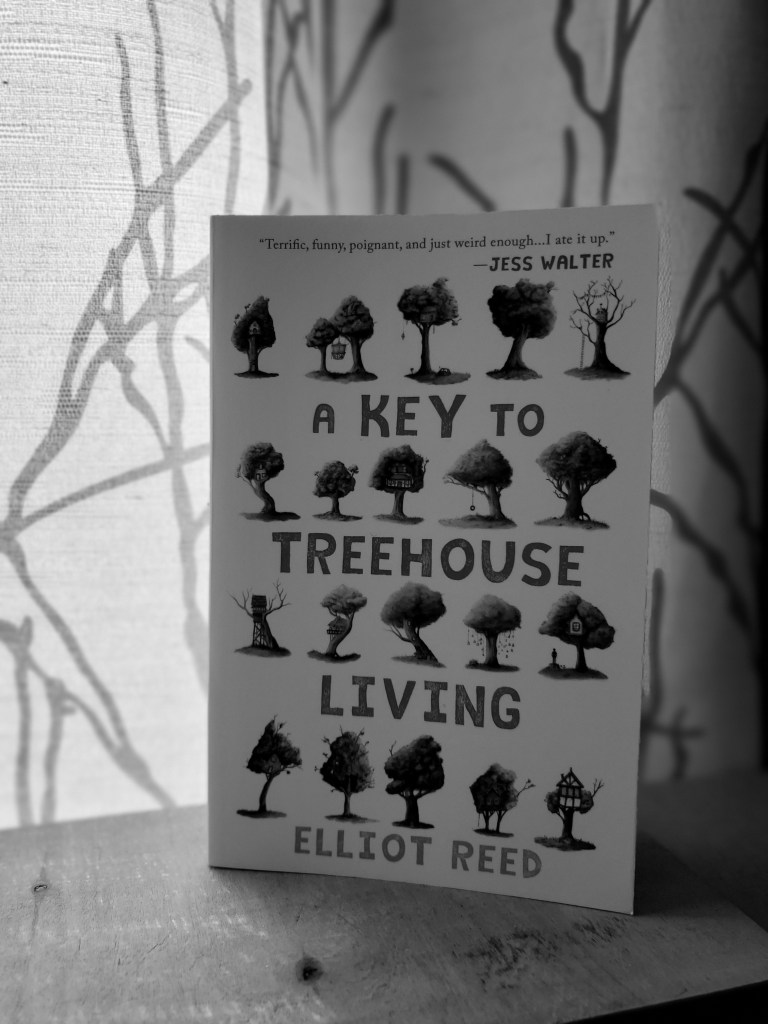
It’s uncomfortable, ultimately, because the reader is at times laughing and at others on the verge of tears. It’s humorous and heart-wrenching because the main character is describing the circumstances he’s in with the language that’s available to him. He’s on a mission to discover where he comes from, to discern why he is where he is and why what’s happened to him happened to him. William is gifted with words and a calculated way of depicting his thoughts, using metaphors and precise terms to get across the trauma the reader discovers he’s living alongside. The reader might be tempted to believe he was born with some sort of disability, but I think, through his unique storytelling, that William’s trauma-filled life thus far is working on his psyche, and his needs and desires really fill the reader with a kind of dull dread for him. It’s neither definitely happy nor downright sad; its feelings impart in pieces.
It’s a great, niche book. It’s little; however, its structure can feel monotonous in parts. Yet the whole of it is gratifying and irreproachable.
John le Carré
Back in 2020, I began reading, falling in love with, obsessing over the masterpieces of John le Carré. I regard him as one of the best thriller writers out there with an excellent and magical sense of humanity and what makes humanity crumble. More plainly, his stories involve espionage, a thrilling series of tense political maneuvers, spies, and Cold War stories. They feel real in a way that James Bond doesn’t, even though James Bond sees much more action in his stories. Naturally, I wanted to read this book, the last published while he was still living (Silverview, his very last novel, arrived under the tree at Christmas. I am eager to start it).

This novel is one of two on this list that’s rigidly set in a specific time in history, using particular parts of the last four to five years of politics, leadership, administrations, and the like to color the lives these characters substantiate. It’s definitely brief, some of the conflicts present themselves immediately and alarmingly, and the conclusion is, I feel, bound tight. The environment is shadowy, much like other le Carré novels, and the characters are more like silhouettes, albeit extremely detailed silhouettes. The reader knows the pertinent things (how they feel, how they think, how they interact) and nothing more.
Nat, our main character, held a notable career in British Intelligence and is still adapting to civilian life. His wife Prue, an in-her-prime human rights lawyer, and his somewhat wayward daughter Stephanie represent the changing landscape of politics in England, challenging ideals Nat once held about the country he served for over forty years. Ed, our do-we-trust-him or do-we-not character, strolls up assertively to Nat one afternoon at his weekly badminton game and lays an indelible amount of interest on Nat for, if anything, competition. Ed is a character with pent-up anger and oddly subtle optimism in his abilities to change things, in his mind, for the better while also yearning to play tricks on the political and socio-economic elite. He is vulnerable and susceptible. Nat is seasoned yet also questioning.
When Nat gets called into one last investigation into a growing threat from Moscow, he’s left examining his role serving the country in the past and juxtaposing it with the shifting attitudes towards it in the present. He grapples with ideas of patriotism, empathy, and humanity, looking back but also looking at what’s ahead of him.
The ambivalent feelings Nat constantly experiences in the narrative make this book compelling for me. He balances everything he’s believed about his country in the past with everything he sees is going wrong with it now, often to the point of tiredness. It’s calamitous and insistent with its ideas; however, it’s casual reading with a few twists and a nice, albeit, abrupt conclusion. Suspense overwhelms the reader’s mind. It’s everything good about a John le Carré novel, and one simply must read another chapter before falling asleep.
Theodore Dreiser
To merely describe the plot of this novel would be to undercut the extreme swaying of emotion and shrink the abundance of chaos it entails. It would make it seem drab and boring. I wrote a note to myself while I was halfway done with the book saying, “I’m only halfway through, but this book is getting quite rough with drama.” And it’s dramatic right to the very end.
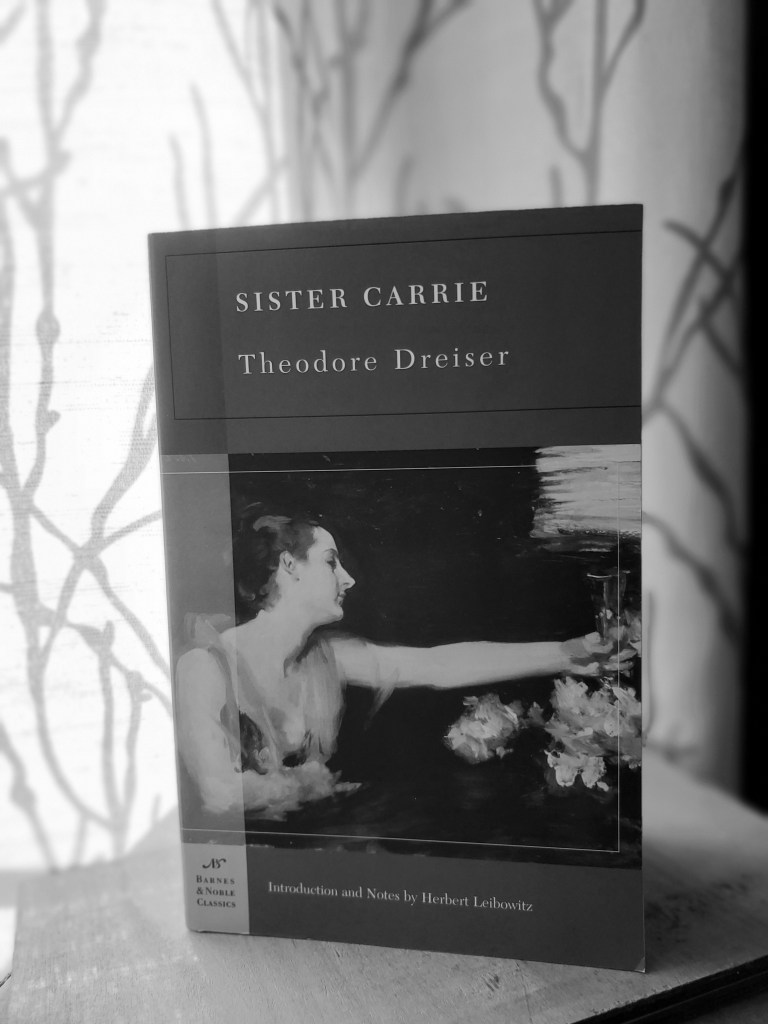
In its essence, Sister Carrie is about a young girl who makes her way to the big city of Chicago for the first time and, in finding that she has to labor intensely to afford the lifestyle she yearns to achieve, opts to engage herself with materialistic people who represent a fulfilled life. I loved it. It’s a melodramatic masterpiece, an agonizing tour-de-force. It is depressing, and there really isn’t anything that’s not shrouded in this gray cover, precipitating cold, bleak snow, even when the characters say they’re happy.
And for a novel that was first published in 1900, goodness, it still speaks. It’s masterful realism through and through and can’t really be explained, only experienced. Melancholic and deeply effectual, the images Dreiser portrays are almost photographic, like he’s writing the scene he’s looking at, experiencing it firsthand. And it’s also why I feel that it’s an accessible classic: it’s a much easier read, tilting more toward the ease and fluidity of F. Scott Fitzgerald and dwells far from the complexity of Henry James.
It’s about the different spheres of life and how some people can escape while others can’t or won’t. Characters in this novel begin at the bottom and ascend, whereas others fall from the top. There’s yearning, there’s deception, there’s conceit, there’s excitement, and there’s death. Yet because it’s a classic, it’s undetected in some senses. It’s obscure in the ways Gatsby is not. Really, only English graduate programs, from what I see, teach Dreiser.
But if you want a story deeply entrenched in operatic and consistently unfolding drama, read this theatrical story.
The Extraordinary Life of Sam Hell
Robert Dugoni
What an exemplary instance of how books choose us: I’m standing in the bookstore with a Zadie Smith novel in one hand and a book about writing in the other, and I see this red book, relatively thick, and there are two copies on the shelf. I choose the less battered one for reasons I can’t explain and flip through it, wondering if the time spent reading it would be better spent on something else. After some brief inspection, I read the novel’s last paragraph because I couldn’t make up my mind. It didn’t mean much of anything to me, of course, but something enticed me, tickling my mind, and I bought it. In short, the well of emotions overflowed, and it is now a book I wholeheartedly suggest whenever the question of recommendations arises.
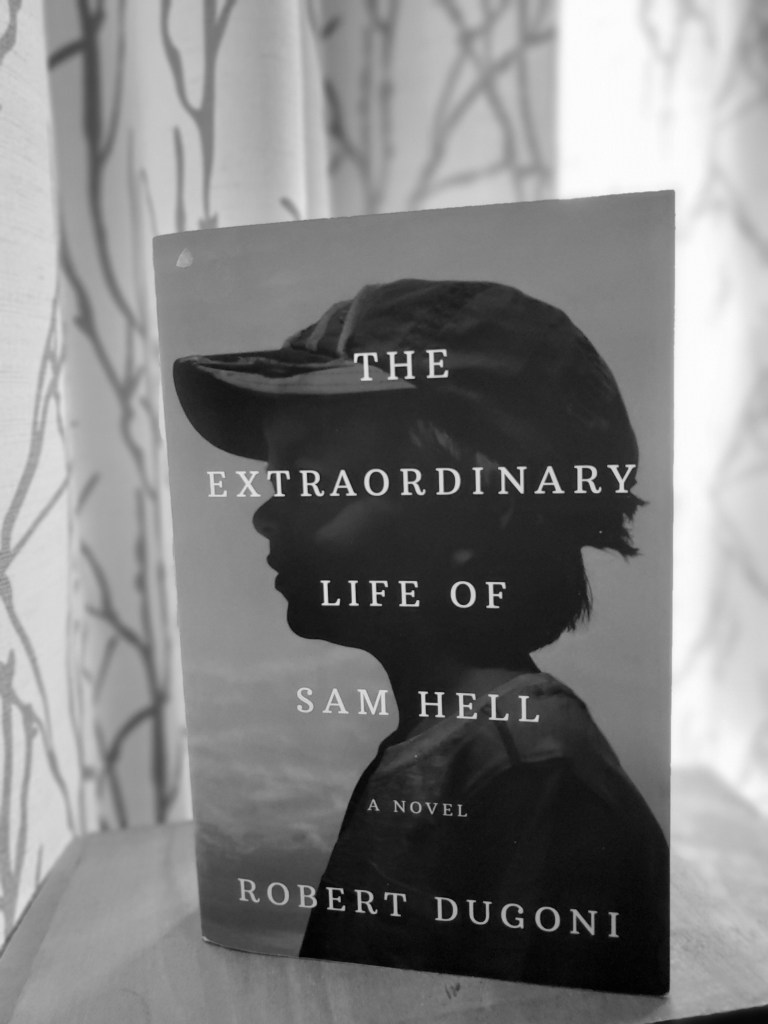
Sam Hill (nicknamed Sam Hell because of his distinctive eye color) has strong, encouraging parents, his mother especially. She’s rough and ready for an argument to defend her son’s place in the world. When he is born with a condition called ocular albinism, causing his irises to be red, his parents fear the life ahead of him and thus begins a tale comprised of many things: tears, laughter, anger, more tears, reclamation.
At thirty-two, Sam tells his story in a series of flashbacks, recounting experiences of being bullied in Catholic grammar school while, in the present, he faces the same bully of his past when a young girl comes to his ophthalmology practice with a damaged retina. He narrates tales of how his two misfit friends, the only black child at his school and a girl with a feisty attitude and devastating reputation, survived their school years together.
He tells stories of his first love, about graduation, and about all the feelings that come with getting older: seeing friends accomplish and overcome things, making mistakes, seeing your parents age. Hardship fills Sam’s life, and his thoughts often hold him back from what he wants. The stories all cover relatable things: wanting to hold on to meaningful life moments, stretching good times out to as far as they can stretch, taking risks. Forgiving yourself for not being the person you thought you would be.
It’s an all-encompassing story spanning four decades of Sam’s life. I think what struck my heart with lightning was how much I related to Sam (not just because we share a name), how much his need to accept himself was weighing down the goodness of his life. I feel like a rip current threw me out to sea, and I drowned a little bit before being washed back up on the shore, a changed and slightly beaten person. The ending is relinquishing even though you never want it to end. It wraps up and sends the reader off to cry in slightly singed happiness over an entirely fictional character even though he feels so authentically real.
Charlie Lovett
If in this list lies a genuinely engrossing mystery, it is this book. And it is so serenely beguiling as well because, as the title suggests, it’s all about books. The conflict begins with books. Characters come together because of books. The mystery is literally a book. It’s such a loving ode to them, their preservation, and a reminder of their importance. Yet this story also involves marriage, murder, mystery, and missing possessions.

Three separate storylines are going on at once: the present, the past, and the way, way back past. And there is a document that travels throughout the narrative, one thing everyone seems to be after, either for repossession or protection: the Pandosto, Robert Greene’s romance lent to Shakespeare by a bookseller in the sixteenth century. Shakespeare marked up this document and created The Winter’s Tale from it. And the original document, covered in Shakespeare’s notes and markings, travels through time and is either lost to it or hidden away in a library.
Cut to the main character Peter Byerly: newly widowed, wallowing through life in the English countryside, and working as a bookseller. We learn of Peter’s history at a college in North Carolina where he met and fell in love with Amanda, a girl different to Peter in many ways. She isn’t someone who calculates everything, like Peter. She can seize opportunities and is comfortable with herself, unlike Peter. Yet the few things they relentlessly share revolve around the immovable love they have for each other and their books.
And though Amanda is gone, Peter reluctantly makes an accommodation with his grieving to chase down a particular curiosity that comes to light, something he found while appraising a library somewhere close to his country home. With the help of a new friend, Peter discovers something that, if proven true, could be a discovery of unequaled proportions, a document that had been lost to time, the Pandosto. It turns into a National Treasure-esque kind of mystery.
The beauty of this story lies in its non-linear structure and its subject matter. It’s the distant past catching up with and making sense of the present. And it’s such a book-loving serenade. A serenade encompassed by the elements of murder, mystery, and flat-out suspense. It’s a fabulous journey to take.
Hanya Yanagihara
In recent years, this book has been in very public view, and I struggled to decide whether or not to include it in this list. Obviously, given that my introduction focused so much on feeling and emotion, I decided affirmatively. I will include here, however, a disclaimer:
If you decide to embark on this journey with these characters, please review a list of trigger warnings. This book is heavy and jumping blindly into it could lead to some deterioration of yourself while reading it because it is so brutal.
It seems that there are two camps people filter to when they trek up this mountain: one finishes it with the kind of overwhelming emotional response that prevents them from thinking or talking about anything else for the rest of the month; the other may or may not finish and will dismiss it entirely as something too traumatic and enraging a story to devote the full energy to consume. Both are valid responses. Both are visceral in their magnitude. It’s hard to walk away without feeling strongly about it.

In blunt summary, it’s about four friends that live out their post-graduate days in New York City, working and living in their respective careers and all keeping alive the friendship, spanning nearly four decades. It is a beautiful story about what adult friendships look like and are characterized by in the 21st century.
A Little Life becomes much more narrow and shadowed than that, though, and it rigorously divides audiences. It’s not quite a roller coaster, but something like a minecart, traveling further and further underground, into impenetrable darkness. Jude, one of the four friends, becomes the focal point while the others fade slightly into the background, and the reader begins to understand why Jude acts, moves, and thinks the way he does. He has no parents. He walks with notable impediments. His past is unknown. And because the novel is a tick over 800 pages in paperback, the reader really gets to bear witness to Jude, what happened to him, and what happens to him. It’s heartbreaking and traumatic. The whole narrative is amazingly structured, masterfully paced, beautifully told, and the characters are so fully realized that you’ll trick yourself into thinking they’re real.
It’s really just that. Some art can be described well, while others need to be experienced. To give an idea, here’s a blurb I wrote down in a journal directly after reading the last lines, tears drying on my face:
“I stand back and think to myself, ‘how could someone write such a thing? What possible motive, what possible place does this story think it can hold in the lives of readers?’ And I can’t think of anything except for the mere fact that it’s good to remind yourself that you’re human. That you care. That empathy isn’t far from your grasp. It lets you know that you can cry. It’s not a gentle read.”
Of course, it can hold several places in the life of a reader. It’s been over two months since I turned the last page, and I’m still thinking about these characters. I talked to friends about this book, a couple of them saw the veracity of my immediate reaction. It’s extreme in the best and worst ways. Its highs are super high, and the lows are the lowest you can go, and then lower still.
What makes it good, then?
Frankly, this novel is unbearable. It’s an undertaking. Yet the beauty within its themes, the scenes that stick with you after you’ve read it, is compelling enough to bolster its popularity. At least, I believe that it does. It’s a wonderful expression of love and a portrait of the lengths we’ll go to show it. It’s also an example of its limits. To reiterate, it isn’t for everyone (review those warnings, please), but the one thing you’ll eventually come to mourn after reading it is that you’ll never be able to read it again for the first time.
⌈⌊⌉⌋
Maybe a book playing with your emotions isn’t your thing, but the wonderful, everlasting truth about books is that there are whole worlds out there for you to discover and love. If you’ve wanted to get into a new habit, give reading a try: it’s psychologically beneficial, you’ll sleep better, and you’ll get to work your imagination muscle harder than anything else. Scavenge bookshop shelves, snoop around libraries, and ponder your friends’ collections. Judge the covers and pick things up that spark a little interest. If you’re really daring, do what I do! Read the last sentence or paragraph (blasphemy, I’m aware). If that sentence stirs enticing curiosity within you, and you absolutely have to find out how that sentence came to be, read the book.
It’s the most unassuming tactic by far.
⌈⌊⌉⌋
Lee DeWyze — We Were Alive
Adele — Can’t Be Together
Eric Nam — One Way Lover
Sara Bareilles — Many the Miles
Rafferty — Apple Pie
 Buy My Ticket Home