

A Year's Review of Non-Fiction
In High School, the English class I liked the least was one entitled “Advanced-Placement Language Arts & Composition.” I was a Junior at the time, and despite having my best friend accompany me in a class where we all loved our teacher, the curriculum was lackluster, in my opinion. Pieces we read, if I recall correctly, included The Road, In Cold Blood, several articles from The Atlantic, and many more non-fiction pieces. The primary goal of the class, however, was for us to identify good arguments, craft good arguments, and begin to shape our academic writing style to prepare us for College writing (hence, Advanced Placement—this badge of honor, of course, did me no favors when it came time to register for Freshman year).
Junior year happened to sandwich us AP students between American Literature the year before and Advanced-Placement Literature & Composition the year after. I had just fallen in love with Gatsby and was preparing to fall again for Yeats and Shakespeare. But I had to jump over the hurdle of AP Language. Compared to these two classes, I wondered why in the world someone would ever want to read anything remotely non-fiction aside from a newspaper. Couldn’t the world survive on fiction alone?
It would only be a matter of time before I would discover the world I had shut myself out of purposely. The world of narrative non-fiction, the memoir, the non-fiction novel, and a little, little thing called The New Yorker. In that period, I would also reread that one Malcolm Gladwell book from the eighth grade, find it suddenly interesting, and then devour all of his works with insane rapidity. What a novel thought, that people’s actual lives and research could be as intriguing as fictional ones!
I think the reason for this is a mixed bag, a combination of stubbornness and forced-feeding. As a Junior, being in an environment dependent on my contributions on topics I neither found gratifying nor particularly valuable (at the time) shut me out of the circle. This predicament is probably why I walked away with a barely passing grade. It was challenging, but it probably wouldn’t have been that difficult had I applied myself from the get-go. Yet, there is also something to be said about the way we teach these subjects. Reading In Cold Blood was a painstaking journey that I would happily have replaced with, now that I know the glory of this book, The Kindness of Strangers. Sure, the former title established a genre. But that’s just trivia. I would’ve had such response to stories in the latter, had we read a book like that instead.
I have such a belief that books find us, not the other way around. Maybe that’s why I had such a tough time reading in grade school. We had to look at books that seemed worlds away from our lives and were expected to understand them and what their messages were and what contributions they handed to society. Are teachers the ones to blame? I think not. That argument seems silly at best and only applicable in rare cases. Is it educational standards? Maybe. That seems most likely. Societal standards? I don’t even know if society should have literature standards aside from “change it up now and then.”
The greats were merely great because I was told they were, not because I knew their greatness for myself. The greats became over-the-top outstanding when I went back to them later and realized that it wasn’t their time to shine just yet.
With these six books, I could write pages of response to, praising their stories and information. I would recommend them any day, not just because I think they’re outstanding but because of their great non-fiction attributes: their attempt to give the reader a glimpse into a world other than their own.
⌈⌊⌉⌋

I never intended to pick this title up. I, instead, settled for it when I couldn’t find Eric Asimov’s memoir in any bookstore near me, and I thought I wouldn’t enjoy this book as much as I did. As per the author, Bianca Bosker drops a stable job in technology to embark upon a journey of learning everything about wine and becoming a certified sommelier; however, for the keen reader, it’s an exploration into engaging dulled senses. The people she meets along the way are complete characters in every good and crazy way possible. And the lifestyle that surrounds the wine universe is astounding, both a positive attribute as well as a negative one. There is so much custom and practice in wine, especially in the service industry (the highly opulent service industry), and it opened my eyes to just how much money and time some people have. She delves into the production of scientifically altered wine products (like the ones found in most grocery stores) and finally shares her honest experience of working in a down-to-earth wine bar.
The lessons Bosker learns, however subtle they may seem, can apply to any person’s life regardless if they dig wine or not. If you’re craving something different, this is an adventure for you.
The Dip: A Little Books that Teaches You when to Quit
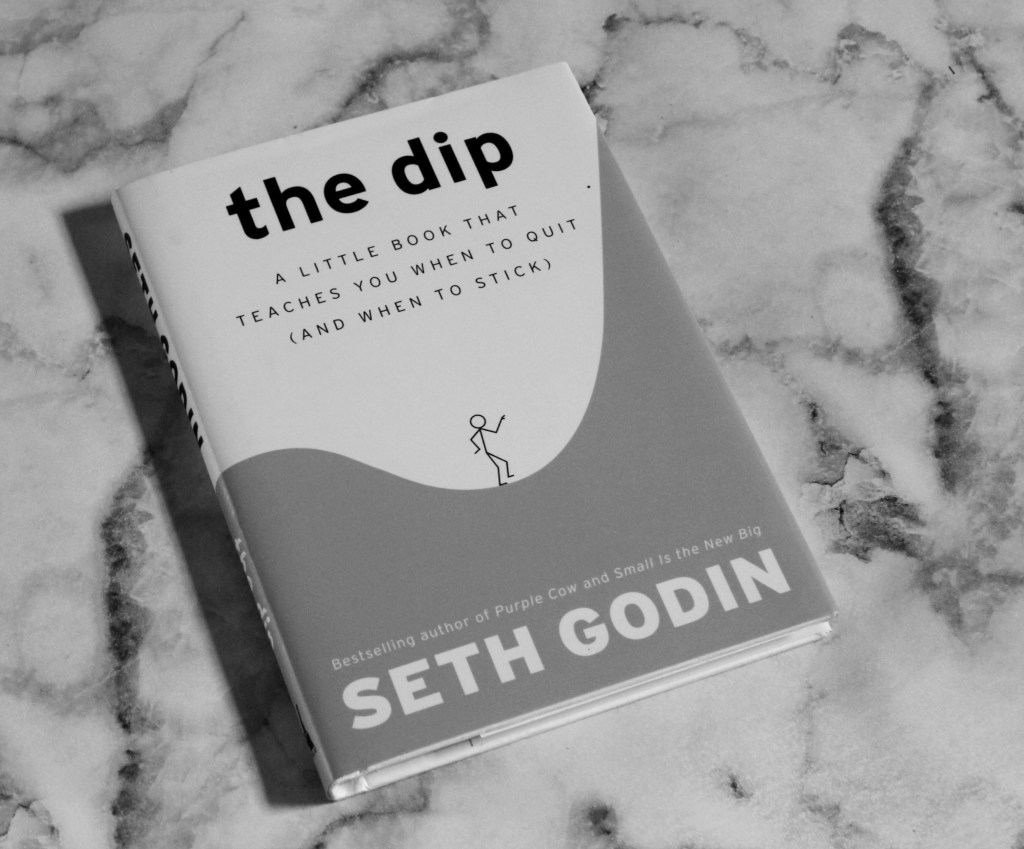
Really, nothing has been easier to read. Seth Godin’s little book is eighty pages chock full of useful tips and self-checking measurements to help you gauge when to quit something or when to stick with it. The phenomenon is called the dip, a curve defined as “the long stretch between beginners luck and real accomplishment.” In other words, it’s the period of time characterized by stress, challenge, and grunt work before the real rewards of endurance shine through…or not. It’s motivational, and the sweet and simple information that Godin writes challenges many common feelings that would cause people to quit or stick with whatever they’re shooting for. He writes excellent examples without being extravagant and lofty. It’s short and straightforward but super powerful in delivering its lessons. Consider reading this if you really want to begin a new project or quit one.
Talking to Strangers: What We Should Know about the People we don’t Know
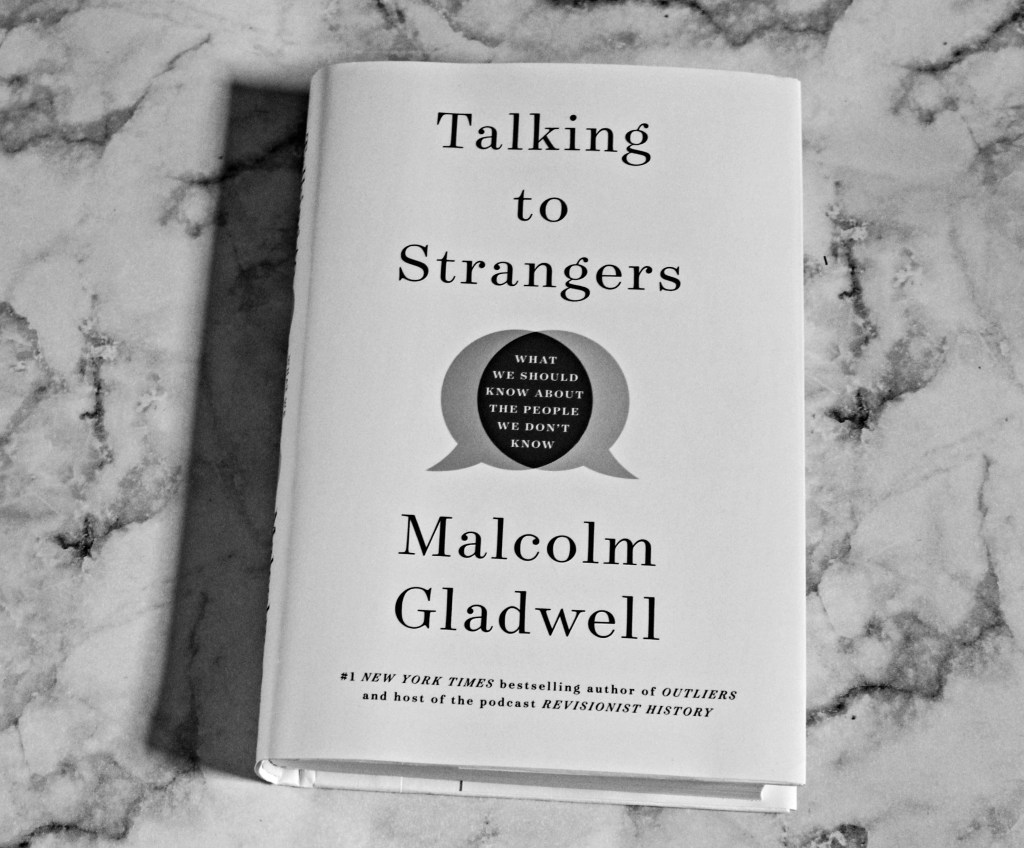
It’s no secret that I love Malcolm Gladwell’s work. I’ve found that he resides in an interesting area of journalistic superstardom in which people know him well and have thoughtful opinions of his ideas, or people have no clue who he is. In any case, I waited all year for this book to be released, and I had the rare opportunity to see him at Georgia Tech in October (where I obtained my signed copy). Contrary to what people might believe about Gladwell (or academics in general?), he’s very funny and humorous despite the sometimes deep subject matters. Listen to his podcast if you don’t believe me.
I believe this to be Gladwell’s best book, yet I also believe it to be his least positive one. In interviews, he consistently describes himself as an optimist, but, in Talking to Strangers, I didn’t get so much a view of hope as much as I did a concrete and widely detailed case study into a variety of stranger interactions gone awry and the explanations for them. I like how he approaches the problems he addresses by viewing them in societal contexts, rather than individualistic ones. Still, in his conclusion, I don’t glean that this is a problem that can be solved overnight. It’ll take years.
It’s a thoughtful and well-assessed analysis as to why we sometimes get it very wrong when we interact with the people with don’t know.

One might guess the best place to read a memoir of this nature would be, well, in nature, deep in the backwoods of some mountainous terrain (the Smokies, perhaps?). I did, in fact, read at least half of these books out in the trees or the middle of some trail in the North Georgia mountains, however, when most of the stories involve miscommunications between critter and human, one misinterprets every branch falling or twig breaking as an animal milling about. The stories are delightful despite the heart racing subject, and I enjoy the practicality that Kim DeLozier enlists to detail how human interaction with nature can have catastrophic effects. The (black) bear survival appendix at the back of each volume is great too.
The books are written in bite-sized stories, so even if you don’t finish an entire volume, a story before bed or at morning coffee (or at dawn in the mountains) is still well worth your time.
The Hidden Life of Trees: What they Feel, How they Communicate—Discoveries from a Secret World
I have a special place in my heart for trees. It’s kind of weird, but I understood just where in my heart they resided when my parents took a few down on their property a few years ago to let the lawn soak up more light. It hurt to see them fall. In much the same way, there’s a place just north of Brevard, North Carolina, called Richland Balsam. It’s the highest point of the Blue Ridge Parkway Motor Road and encapsulates hikers in a magnificent Spruce-Fir forest, where everything is tall, shaded, and smells like Christmas.
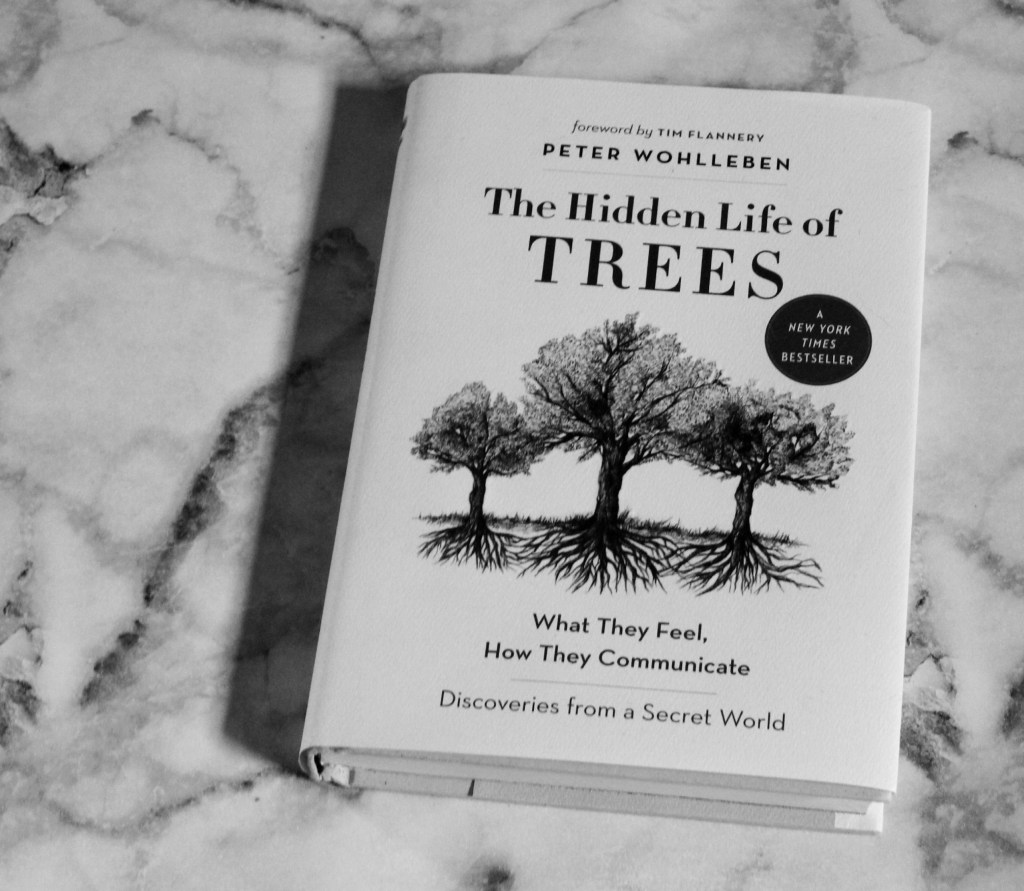
I was opened up to their world by way of Peter Wohlleben’s book, which is kind of a roller coaster of information but is, nonetheless, quite the magical journey. For instance: did you know that the more colorful deciduous trees are in the Fall, the less likely they’ll be attacked by insects in the warmer seasons? Or that under certain conditions, the cambium, the layer between the wood and the bark, can be eaten by humans? That in the Springtime, water pressure is so high inside the vessels of the trunk that it can be audibly measured? I enjoyed this book for many reasons, but the one I love it most for is that it brings back the magic and wonder of things that many consider to be mere objects rather than spectacular forms of life. It details many processes that trees go through every season to stay living or to die comfortably or to aid its fellow brethren and to support the ecosystem. It truly is a fascinating, and enchanting, sojourn into the forest.
Walden on Wheels: On the Open Road from Debt to Freedom
I graduated from college this year. What a time for celebration it was that this period of hardship, stress, and determination could conclude, and life could finally begin. Oh, but wait, what am I going to do? I found solace in this memoir. I made the mistake of reading reviews just as I was falling in love with Ken Ilgunas’s story because its critics say that he’s being preachy and judgmental. But oh my goodness, how his life mirrors mine in so many ways.
Take what you will from it, but I don’t believe he’s pretentious or preachy. He’s just explaining his journey.

A short summary of this book is mediocre high school student finds peace in the wildness of Alaska’s Gates of the Arctic and develops a hankering for the unknown while attempting to figure out just what to do with the rest of his life and trying to pay off his student loan debts but also going to Grad School at Duke University, living in a van, staying off campus police radar, and finding his purpose in life. I’m currently stuck somewhere in the middle there. I even relate to the mysterious case of Tourette’s like twitches he experiences in the beginning, possibly stemming from stress and anxiety, or sloth and slackness.
It’s humorous and, at times, suspenseful, but it gave me such specific hope that romantics can still find super meaningful lives amidst a post-education slump. Nature fanatics and conservationist English majors can find their space in the world and thrive in it.
I wholly deem this book a source of encouragement and a strong recommendation if you’re feeling stuck in a rut.
⌈⌊⌉⌋
JOHNNYSWIM—Bridges
Vince Guaraldi Trio—Linus and Lucy
THE BAND CAMINO—Daphne Blue
Kelly Clarkson—Meaning of Life
Lord Huron—Frozen Pines
Bob Moses—Tearing Me Up
 Buy My Ticket Home
As a teacher for over twenty years, I always encouraged the kids/preteens to think for themselves. This is difficult as I’m teaching them and expecting/requiring their attention and work efforts. But through the teaching, lessons, and information/projects, I’m working to get them to need me less and less, trust in the understanding inside them, and look for things they’re interested in, questioning. I’ve even told them to question my own opinions, test them, and to challenge me when we have those sessions. And writing essays include opinion pages where they support what they believe. I encourage them to read, try different books, and challenge themselves, but also to get hobbies.
LikeLiked by 2 people
“Books find us.” I love that.
While in general I’m a fiction fiend, I must say that memoirs have always been the lone exception. I LOVE memoirs. It’s like the opportunity to live another life….and once you hit middle age, that’s a gift.
LikeLike